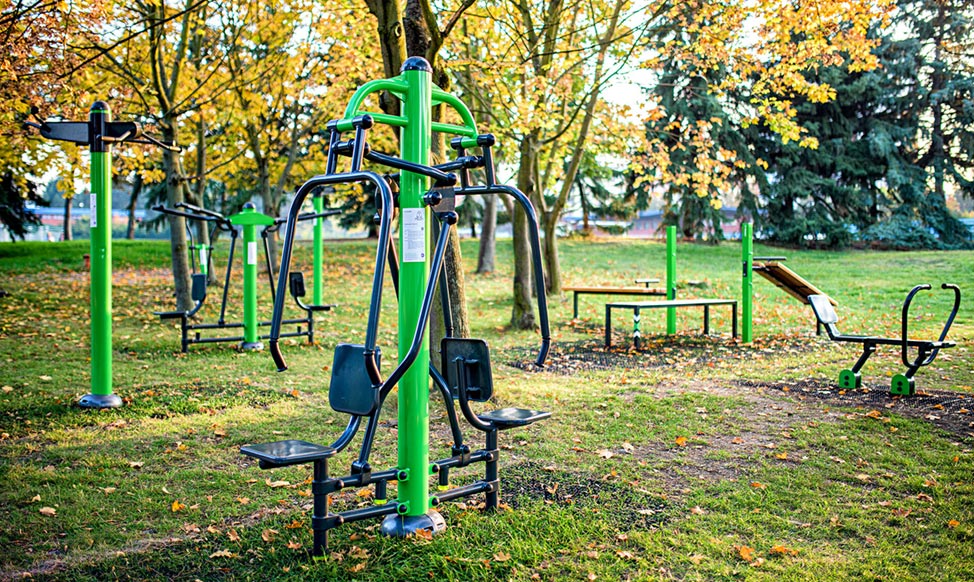
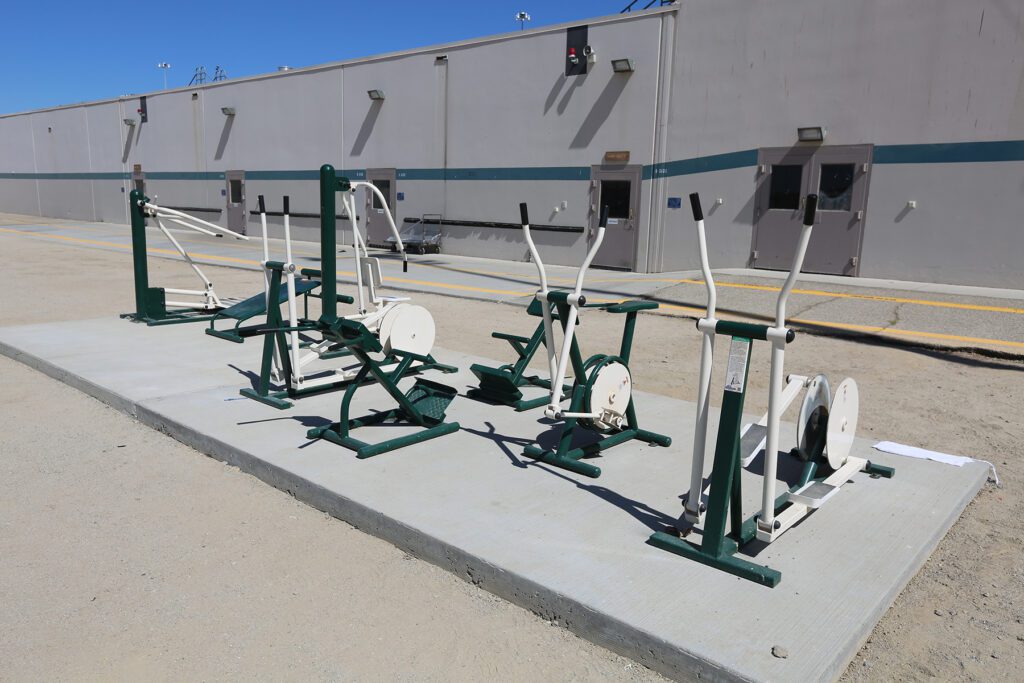
When a municipality purchases outdoor fitness equipment and installs it in a public park, the liability shifts from the manufacturer to the owner-operator the moment an incident occurs. Without documented compliance with recognized safety standards, that liability exposure is difficult to manage and harder to defend.
ASTM F3101 is the standard that defines what safe, institutional-grade outdoor fitness equipment looks like, structurally, materially, and operationally. Procurement officers who understand its requirements are better positioned to evaluate vendors, protect their organizations, and make defensible purchasing decisions with taxpayer dollars.
This guide covers what ASTM F3101 requires, whether compliance is mandatory, how to verify vendor claims, and what documentation to request before signing a purchase order.
What Is ASTM F3101?
ASTM F3101-21a, Standard Specification for Outdoor Fitness Equipment is published by ASTM International and maintained by Subcommittee F08.30. The current edition, F3101-21a, was published in July 2021 and spans 25 pages.
- Scope at a glance: ASTM F3101 covers the design and manufacture of outdoor fitness equipment intended for unsupervised public use. Equipment must be permanently anchored, and the standard applies to users ages 13 and older.
The standard covers bodyweight resistance stations, balance equipment, and cardiovascular equipment permanently installed in parks, military bases, correctional facilities, campuses, and similar public or institutional environments.
What F3101 does NOT cover:
- Powered or motorized equipment
- Movable weight or plate-loaded equipment
- Obstacle courses and challenge elements
- Playground equipment (that’s ASTM F1487, a separate standard entirely)
Important distinction: ASTM F3101 and ASTM F1487 are frequently confused, particularly by procurement officers who’ve worked on playground projects. F1487 governs playground equipment for children ages 2–12 and has been adopted into law by many states. F3101 governs outdoor fitness equipment for ages 13 and older and operates as a voluntary consensus standard. They share no scope overlap. Specifying the wrong standard in an RFP is a common procurement error.
Companion standards to know:
- ASTM F2571: Standard Test Methods for Outdoor Fitness Equipment. Defines the testing methodology used to validate compliance with F3101.
- ASTM F2276: Standard Specification for Fitness Equipment. The general fitness equipment specification; F3101 is its outdoor-specific extension.
What Does ASTM F3101 Require?
ASTM F3101 covers eight primary requirement areas. Each area defines minimum standards that equipment must meet before it is suitable for unsupervised public installation.
Structural Integrity & Permanent Anchoring
Equipment must be permanently anchored to prevent tipping, shifting, or displacement during use. Structural design must be documented to withstand specified user load capacities, the anchoring system is not optional or field-improvised.
Weight Capacity Documentation
Manufacturers must document and communicate the maximum user weight for each equipment station. Stated capacities must be validated through load testing, not assumed from material specifications.
Clearance Spaces & Equipment Spacing
F3101 establishes minimum clearance zones around each station, minimum spacing between adjacent pieces of equipment, and fall zone dimensions based on equipment height. These requirements protect users from collisions and falls during simultaneous use of a fitness area.
Entrapment Hazard Prevention
Equipment must be designed to eliminate head and finger entrapment risk. This includes removing pinch points, eliminating sharp edges and protruding hardware, and ensuring that openings cannot trap body parts. Although the standard is written for ages 13 and older, entrapment requirements are enforced rigorously, younger children frequently access public fitness installations unsupervised.
Safety Surfacing Requirements
Within designated fall zones, impact-attenuating surfacing is required. Acceptable materials include rubber tiles, poured-in-place rubber, and engineered wood fiber (EWF). Surface material must meet fall height attenuation requirements based on the maximum fall height of adjacent equipment.
Signage & Labeling
Each station must carry instructional signage, age-restriction warnings (ages 13+), and manufacturer identification and contact information. Signage must be legible, durable, and permanently affixed, not paper-based or UV-degradable.
Weather-Resistant Materials & Finish
Materials must withstand UV exposure, precipitation, and temperature extremes across the full range of climates in which the equipment may be installed. Corrosion-resistant coatings and hardware are required. For coastal or cold-climate installations, where road salt exposure is a factor, salt spray resistance is a key performance indicator.
Maintenance Schedule Requirements
Manufacturers must provide documented inspection and maintenance guidelines, including recommended inspection intervals and a defined process for replacement part procurement. An equipment manufacturer that cannot supply replacement parts within a reasonable timeframe creates long-term operational risk for the purchasing entity.
Accessibility Considerations
F3101 references ADA and ADAAG requirements as they apply to outdoor fitness installations. This includes accessible routes to equipment, transfer platforms where appropriate, and wheelchair-accessible station designs where applicable. Procurement officers responsible for ADA-compliant public spaces should review ADA Standards for Accessible Design alongside F3101 requirements.
Is ASTM F3101 Mandatory or Voluntary?
No state or federal law currently mandates ASTM F3101 compliance for outdoor fitness equipment. This distinguishes it from ASTM F1487, which many states have incorporated into enforceable playground safety regulations.
Despite its voluntary status, dismissing F3101 as optional creates measurable risk.
Why procurement officers treat it as mandatory:
- Municipal RFPs regularly specify it. F3101 compliance is increasingly written into procurement specifications by parks departments and public agencies. A vendor that cannot document compliance may be disqualified from consideration entirely.
- Insurance requirements are tightening. Liability insurers covering public parks and recreation facilities are beginning to reference safety standards in coverage documentation.
- Litigation exposure is real. In the event of a user injury, non-compliant equipment places the liability burden squarely on the equipment owner-operator. Compliance documentation is a documented defense.
- There is no regulatory enforcement body. The responsibility for ensuring installed equipment meets F3101 requirements rests entirely with the purchasing organization, not the manufacturer, not a regulator.
The practical framing: voluntary compliance is a risk management decision, not a procurement formality. Organizations that install non-compliant equipment in public spaces are accepting liability exposure that a standard-compliant purchase would have avoided.
How to Verify ASTM F3101 Compliance During Vendor Evaluation
Understanding compliance requirements is the first step. Verifying that a specific vendor actually meets them is the harder problem.
The certification gap. IPEMA (International Play Equipment Manufacturers Association) certifies playground equipment to ASTM F1487, but IPEMA does not certify outdoor fitness equipment to F3101. There is no CPSI (Certified Playground Safety Inspector) equivalent for outdoor fitness. As of the publication of this guide, TUV SUD is the primary identified third-party certification body conducting F3101 testing.
The practical implication: most outdoor fitness equipment manufacturers self-certify F3101 compliance. Self-certification is standard practice in this product category. It is not inherently fraudulent. But a manufacturer claiming F3101 compliance without third-party validation is asking you to take their word for it, and that creates documentation gaps that are difficult to defend after an incident.
Third-party testing provides independent verification that equipment was tested against F3101 requirements under controlled conditions by an accredited laboratory.
10-Point Vendor Evaluation Checklist
Before awarding a contract for outdoor fitness equipment, request the following from each vendor under consideration:
- Written compliance statement: Signed, on company letterhead, specifying ASTM F3101-21a compliance
- Third-party test reports: From TUV SUD or an equivalent accredited testing laboratory
- Weight capacity documentation: Per-station maximum user weight with testing methodology
- Clearance zone specifications: Fall height and clearance zone data per station
- Installation and anchoring instructions: Including permanent in-ground anchoring specifications
- Maintenance manuals: With recommended inspection intervals and inspection checklists
- Material certifications: Steel grade, coating thickness specs, and documented salt spray test hours
- Load testing data: Including testing methodology and recorded results
- ADA compliance documentation: Accessibility specifications and compliant design documentation
- Product liability insurance certificates: Current certificates of insurance covering the product line
Save this checklist. Use it for every outdoor fitness equipment procurement regardless of project size. The documentation it generates protects your organization if equipment performance is ever challenged.
Related Standards You Should Know
ASTM F3101 does not exist in isolation. A fully specified outdoor fitness installation may reference several companion standards depending on equipment type, user population, and installation context.
| Standard | Title | Relevance |
| ASTM F2571 | Test Methods for Outdoor Fitness Equipment | Companion standard, defines how to test equipment against F3101 design requirements |
| ASTM F2276 | Specification for Fitness Equipment | General fitness equipment baseline; F3101 extends it for outdoor/public-use contexts |
| ASTM F1487 | Safety Performance Specification for Playground Equipment | Playground standard (ages 2–12); different scope entirely, do not conflate with F3101 |
| ASTM F3021 | Universal Design of Fitness Equipment | Addresses inclusive design beyond ADA minimums for fitness applications |
| ASTM F3022 | Universal Design of Outdoor Exercise/Fitness Equipment | Outdoor-specific inclusive design companion to F3021 |
| EN 16630 | Permanently Installed Outdoor Fitness Equipment (European) | European equivalent; relevant for internationally manufactured products or global procurement |
| ADA / ADAAG | Americans with Disabilities Act / Accessibility Guidelines | Federal accessibility requirements applicable to all public outdoor fitness installations |
Procurement officers managing inclusive fitness projects should reference ASTM F3021 and F3022 alongside F3101. These standards address universal design considerations, accessible equipment layouts, reach range requirements, and transfer access, that go beyond ADA minimums and support a wider range of user abilities.
How TriActive USA Addresses ASTM F3101 Requirements
TriActive USA designs and manufactures institutional-grade outdoor fitness equipment in Southern California, 100% Made in USA with full supply chain transparency. The following table maps documented TriActive product specifications to the core requirement areas of ASTM F3101-21a.
| ASTM F3101 Requirement | TriActive USA Specification |
| Structural integrity & anchoring | 11-gauge welded steel construction, schedule 40 tube, permanent in-ground anchoring system |
| Weight capacity | 350 lb documented weight capacity per station |
| Entrapment prevention | Tamper-proof design, no removable components, rounded hardware, anti-vandal construction |
| Weather resistance | Zinc primer base coat + 6–8 mil powder coat finish; 1,000 hours salt spray resistance testing |
| Accessibility | Wheelchair-accessible equipment options; ADA-compliant designs available |
| Maintenance & warranty | 10-year structural warranty; 5-year moving parts; 2-year rubber and hardware |
| Signage | Instructional decals permanently affixed to each equipment station |
| Manufacturing quality | 100% Made in USA; documented supply chain; institutional deployment record in correctional, military, parks, and education verticals |
TriActive equipment is available through a GSA Schedule contract (via IRON COMPANY dealer) and through cooperative purchasing programs including NPPGov, BuyBoard, and Mohave, purchasing vehicles commonly used by municipal procurement offices.
Documentation request: Procurement officers should request formal ASTM F3101-21a compliance documentation directly from TriActive USA. Contact their team to confirm specific compliance documentation for your project requirements before finalizing specifications.
ASTM F3101 Frequently Asked Questions
What is ASTM F3101?
ASTM F3101-21a is the Standard Specification for Outdoor Fitness Equipment, covering the design and manufacture of permanently anchored outdoor fitness equipment intended for unsupervised public use by individuals ages 13 and older. It is published by ASTM International and maintained by Subcommittee F08.30.
Is ASTM F3101 compliance mandatory?
No. ASTM F3101 is a voluntary consensus standard, no federal or state law requires compliance. However, many municipalities specify it in procurement RFPs, and documented compliance serves as a substantive liability shield for equipment owners and operators.
What is the difference between ASTM F3101 and ASTM F1487?
ASTM F3101 governs outdoor fitness equipment for users ages 13 and older. ASTM F1487 governs playground equipment for children ages 2–12. They are entirely separate standards with different scopes, different requirements, and different enforcement histories. Specifying one when you need the other is a procurement error.
Is there a third-party certification program for ASTM F3101?
IPEMA does not certify outdoor fitness equipment to F3101. TUV SUD is the primary identified third-party testing body. Most manufacturers self-certify compliance, which is standard practice, but procurement officers should request third-party test reports and documentation rather than accepting a self-declaration alone.
How often should outdoor fitness equipment be inspected?
Manufacturers should provide a documented inspection schedule. Best practice is a visual inspection monthly, a comprehensive structural inspection annually, and an immediate inspection following any severe weather event or reported incident.
Does ADA apply to outdoor fitness equipment installations?
Yes. Public outdoor fitness installations must comply with ADA accessibility requirements, including accessible routes to equipment and, where applicable, wheelchair-accessible equipment stations. The US Access Board outdoor developed areas guidelines provide additional specificity for recreation facility planning.
Make Compliance Part of Your Procurement Process
ASTM F3101 is voluntary. The liability exposure from non-compliant equipment is not.
For procurement officers, parks directors, and facility managers evaluating outdoor fitness vendors, the 10-point checklist in this guide is a practical starting point. Request documentation before signing. Verify third-party testing. Confirm weight capacities, anchoring specifications, and material certifications in writing.
TriActive USA builds institutional-grade outdoor fitness equipment designed for the most demanding environments, correctional facilities, military installations, public parks, and educational campuses. 100% Made in USA, with a 10-year structural warranty and full specification documentation available on request.
Contact TriActive USA to discuss ASTM F3101 compliance documentation and specifications for your next outdoor fitness project.