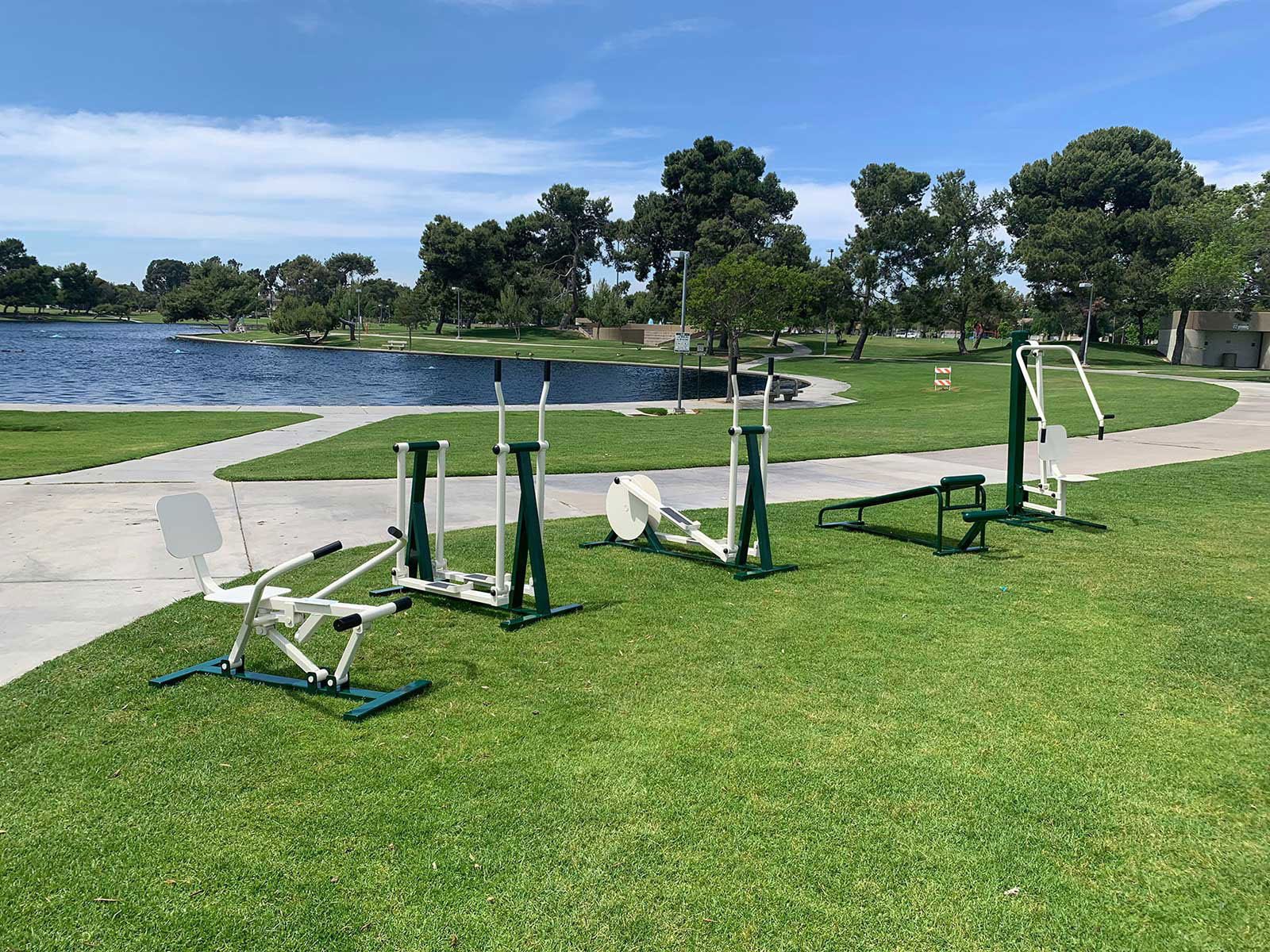
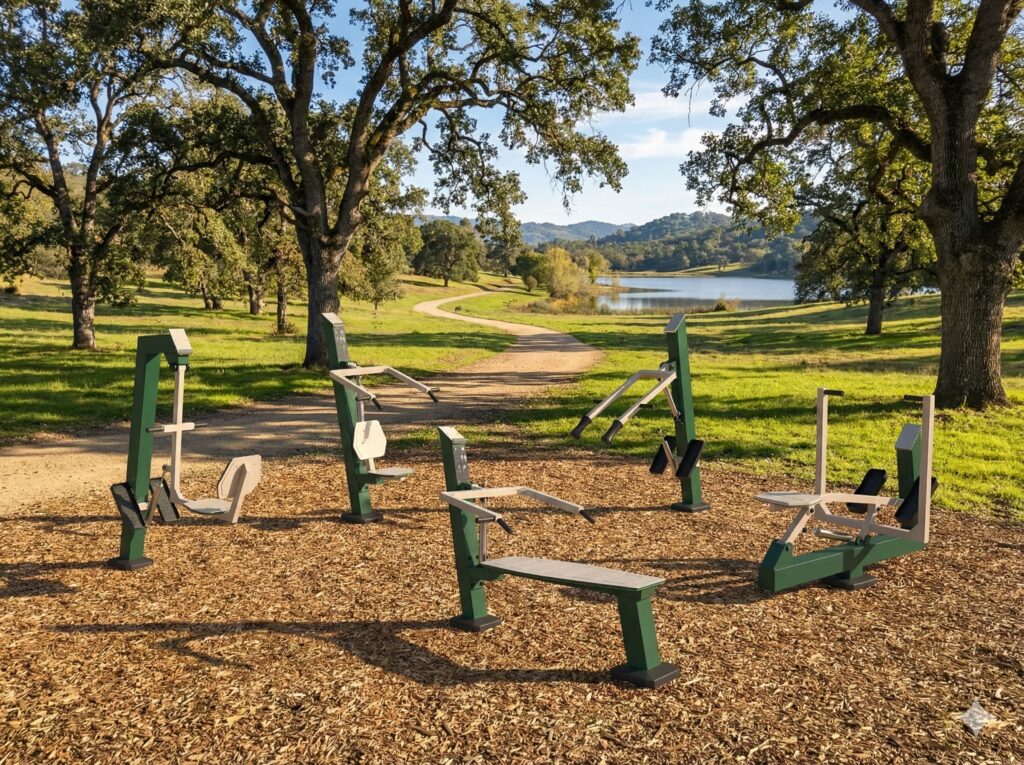
As people continue to put a greater emphasis on wellness, outdoor fitness parks have become a major priority for park districts, community organizations, and housing developments. These outdoor spaces help people of all ages live healthier, more engaging lifestyles
But designing a successful outdoor fitness park involves much more than purchasing a few pieces of workout equipment. The best outdoor fitness park designs consider user experience, accessibility, safety, and durability.
Whether you’re planning a new outdoor fitness space or updating an existing one, understanding outdoor fitness park design can help ensure your installation meets your community’s needs.
What is an Outdoor Fitness Park?
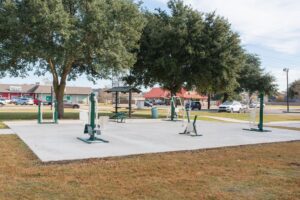
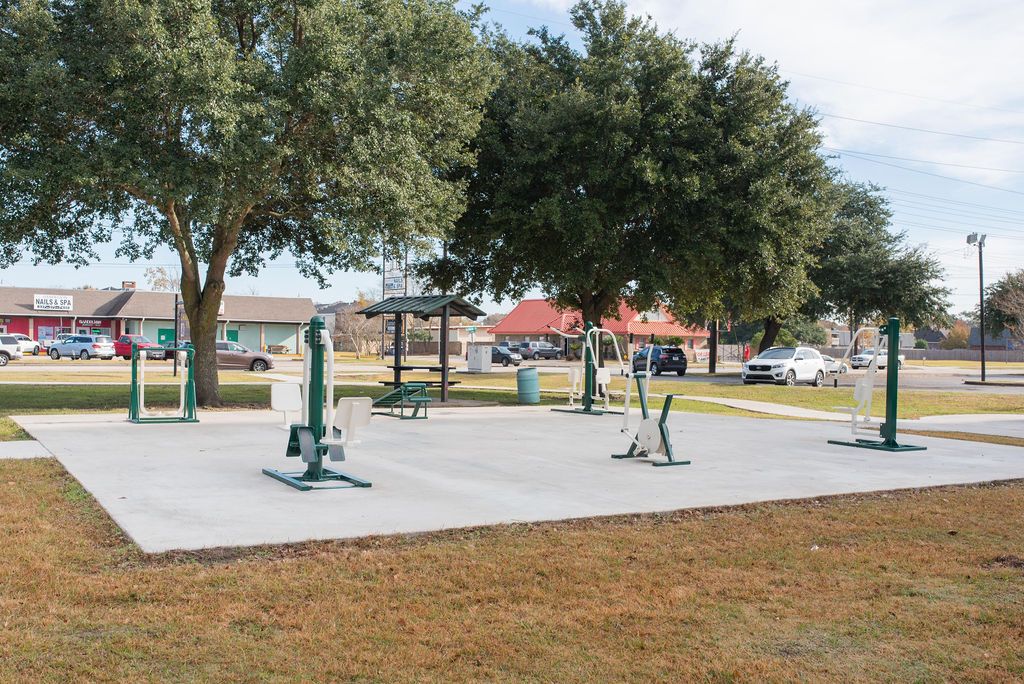
An outdoor fitness park is a recreational space that provides exercise equipment and fitness gear in an open-air environment. Some are public, like city parks, whereas others are connected to clubs, institutions, and other organizations.
In order to create a functional outdoor fitness park design, it’s important to create a space that’s welcoming, intuitive, and accessible to diverse groups of people. The best outdoor fitness parks are designed to be used by a wide range of users, from beginners and seniors to athletes.
Why Outdoor Fitness Parks Are Growing in Popularity
Communities and institutions are increasingly investing in outdoor recreation because of its ample benefits. Outdoor fitness parks support both physical and mental health, while breaking down many barriers in terms of access to exercise opportunities.
Outdoor fitness parks can help organizations:
- Promote healthier lifestyles: Exercise is proven to improve heart health, reduce the likelihood of chronic diseases, and strengthen muscles.
- Support community wellness initiatives: An outdoor fitness park in a public space can be used by anyone, without the need for a costly gym membership.
- Encourage intergenerational relationships: People of all ages use outdoor fitness parks, from kids to elderly folks. This is particularly important among elderly populations, who experience high rates of loneliness and isolation.
- Enhances public amenities: Adding an outdoor fitness park is a great way to provide additional amenities to the community, which can enhance resident satisfaction.
How to Design an Outdoor Fitness Park
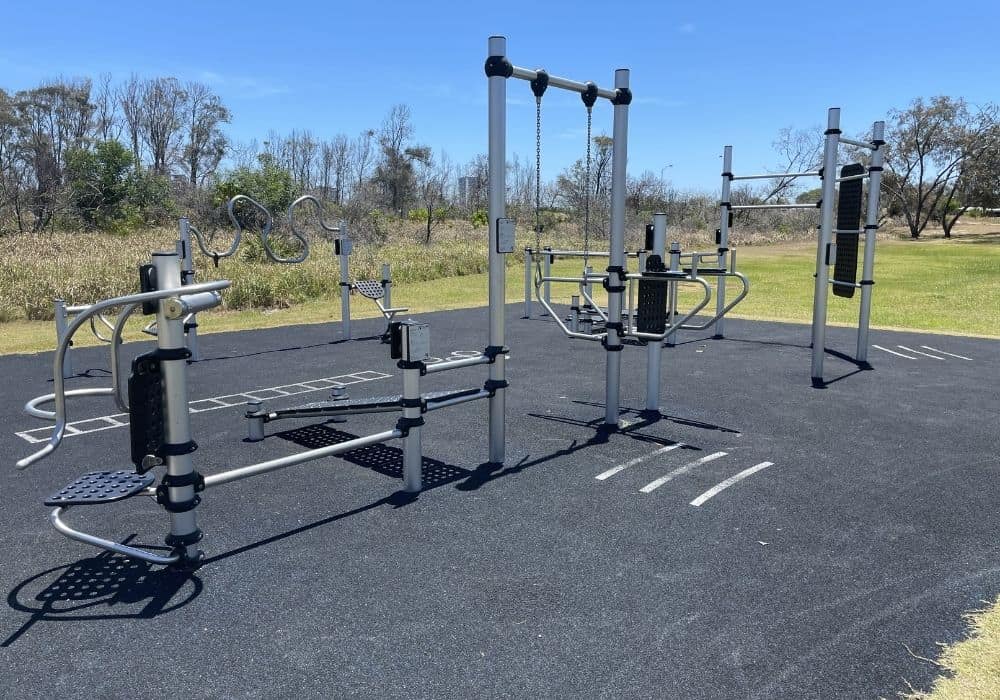
Ready to get started? Here is a step-by-step breakdown on how to build an outdoor fitness park.
Step 1: Set Goals for Your Fitness Park
Before building or designing anything, it’s important to set goals for your space. Different outcomes require completely different approaches to design. By identifying your target audience and setting goals first, you can ensure your design supports the final outcome. For example:
- Public park: Prioritize accessibility and family-friendly design
- Military space: Focus on functional training and endurance
- Senior community: Include low-impact mobility machines
- University campus: Provide plenty of cardio and strength training equipment
Step 2: Assess the Space
Next, it’s time to evaluate the space. This will help you in defining the design and understanding the steps you’ll need to take to get there. Take a look at:
- Total square footage
- Terrain and grading
- Drainage
- Sun exposure
- Tree coverage
- Proximity to other park amenities
- Utility access
Step 3: Design the Layout
Rather than randomly placing exercise equipment throughout your park, it’s important to focus on functionality when it comes to your design. Creating activity zones establishes a natural flow for your outdoor fitness park design and improves its usability. Consider these zones:
- Warm up zone: This is where people will prepare for their workout. Include stretching stations, as well as balance and mobility equipment.
- Cardio zone: Include machines like air walkers, ellipticals, and other machines that improve endurance and heart health.
- Strength training zone: These exercises are designed to help build strong muscles. Include chest press stations, pull up bars, and other bodyweight resistance equipment.
- Recovery zone Recovery is an essential part of any workout. Include benches, shade structures, and hydration stations.
Some populations may require specialized zones according to their specific fitness goals. For instance, an outdoor fitness space for athletes may include things like parallel bars and plyometric stations.
Step 4: Consider ADA Accessibility
Accessibility is an essential part of outdoor fitness park design. ADA-compliant outdoor fitness parks create opportunities for people of all abilities to safely and comfortably workout. Consider these accessibility features to design an inclusive and welcoming outdoor fitness park:
- Accessible pathways: Ensure there’s a way to navigate your space without steps or steep inclines.
- Proper surface materials: Avoid gravel and woodchips, which are hard to navigate with mobility devices.
- Accessible fitness equipment: Provide wheelchair-accessible workout equipment that can be used while seated.
Step 5: Choose the Right Equipment
As important as the design of your outdoor fitness park is the equipment you install. Outdoor fitness equipment must be able to withstand years of exposure to the elements and constant use without very much maintenance.
Look for the following when selecting your outdoor fitness equipment:
- Corrosion-resistant materials: Powder coatings protect internal metal parts from corrosion caused by water or salt.
- Weatherproof design: Look for UV-resistant finishes and weatherproof bearings. Avoid equipment made from plastic.
- Tamper-resistance: Generally speaking, the more simple the design, the better. Look for equipment with few small parts, so it’s harder to tamper with.
- Warranty coverage: When something goes wrong, it’s good to be covered.
Step 6: Securely Install
Once you’ve selected your equipment, it’s time to securely install it. Either permanently anchor your equipment in poured concrete, or use heavy-duty bolts to secure it to the floor. The last thing you want is for your equipment to tip when in use.
Step 7: Add in Shade, Seating, and Convenience
Finally, it’s time to account for comfort. A good outdoor fitness park should feel inviting. This has a direct impact on how much use your community gets out of it. Consider installing the following features for your outdoor fitness park:
- Shade structures: Whether shade sails, gazebos, or overhangs, shade will help your visitors cool down during their visits.
- Seating areas: Allow plenty of space to rest between sets.
- Lighting: Proper lighting and visibility are important for early morning and late-night workouts.
- Bike racks: Provide a place for bikers to securely lock up.
- Trash cans: Your maintenance crew will thank you!
Avoid These Common Outdoor Fitness Park Design Mistakes
Avoiding common mistakes can significantly improve the functionality of your outdoor fitness park design and pay off in the long run. Don’t make these simple errors:
- Overcrowding equipment: Too much equipment in a small space can cause safety concerns. Leave plenty of space between equipment for people to move around
- Choosing residential-grade equipment: Residential gym equipment simply isn’t designed for the heavy use or constant exposure of outdoor fitness parks. Choose purpose-built equipment, instead.
- Forgetting shade and seating: A comfortable environment is essential to keep people coming back.
Partner With TriActive for Your Outdoor Fitness Park
Designing an outdoor fitness park requires careful planning, durable equipment, accessibility, and a clear understanding of your community. The most successful outdoor fitness park designs combine functionality, safety, and durability, for a final result people want to use.
If you’re interested in installing an outdoor fitness park, we’re here to help. Source purpose-built outdoor exercise equipment from our selection. Contact us today to get started.