
Outdoor fitness spaces are the most accessible way to get your community moving, but they come with trade-offs. Outdoor gym equipment lives outside year-round, and that means constant exposure to whatever Mother Nature has in store. It gets soaked by rain, frozen by snow, baked by sun, and, if you’re near the coast, eaten away by salt air. Left unprotected, even the best equipment can rust, warp, or become unsafe.
The good news is that weather damage isn’t inevitable. With the right equipment, smart installation choices, and routine maintenance, you can keep an outdoor gym safe and functional through every season. Read on to learn all about it.
Why Weather Protection Matters for Outdoor Gym Equipment
Unlike indoor fitness equipment, outdoor gym equipment has nearly constant exposure to the elements. If you don’t choose equipment designed for the outdoors, you risk:
- Shortened equipment lifespan: Equipment can rust, corrode, and deteriorate much more quickly without weather protection.
- Greater safety risks: Damaged and broken equipment presents significant injury risk to your community and a greater liability for you.
- More expensive maintenance costs: Weather damage may require costly repairs or replacement altogether, dramatically increasing the cost of maintaining your outdoor gym.
How Weather Damages Outdoor Gym Fitness Equipment
The more extreme your weather, the more stress on your outdoor fitness equipment. Excessive heat, freezing temperatures, humid conditions, and salty air have significant impacts on your gym equipment.
Rain and Humidity
While metal lends strength and durability to outdoor gym equipment, it doesn’t handle moisture well. Without proper protection, rain, humidity, and other sources of moisture can cause metal equipment to rust and corrode. From deteriorating parts to seized joints and bearings, outdoor gym equipment in wet environments can face serious challenges.
Heat and UV Exposure
Prolonged UV exposure causes a type of metal corrosion known as photo corrosion. It also degrades paint and sealants more quickly and accelerates rusting.
If your gym has significant UV exposure, equipment with plastic parts is ill-advised. UV rays cause plastic seats and handle grips to become brittle and crack, creating unstable surfaces and sharp edges.
Snow, Ice, and Cold
In addition to damage caused by moisture, snow and ice present unique risks when it comes to outdoor fitness equipment. Water gets trapped in cracks and crevices, then expands as it freezes. This creates pressure that distorts metal parts. Snow and ice also cause components to seize, rendering equipment unusable.
Salty Air
Is your outdoor gym located along a coastline? If so, it’s important to be aware of the impacts of salty air. Salt accelerates the reactions that cause metal to rust and corrode. In fact, sea air corrodes metal up to 10 times faster. Even 50 miles inland, your outdoor gym equipment may undergo significant damage as a result of salty air without proper protection.
How To Protect Outdoor Gym Equipment from Weather
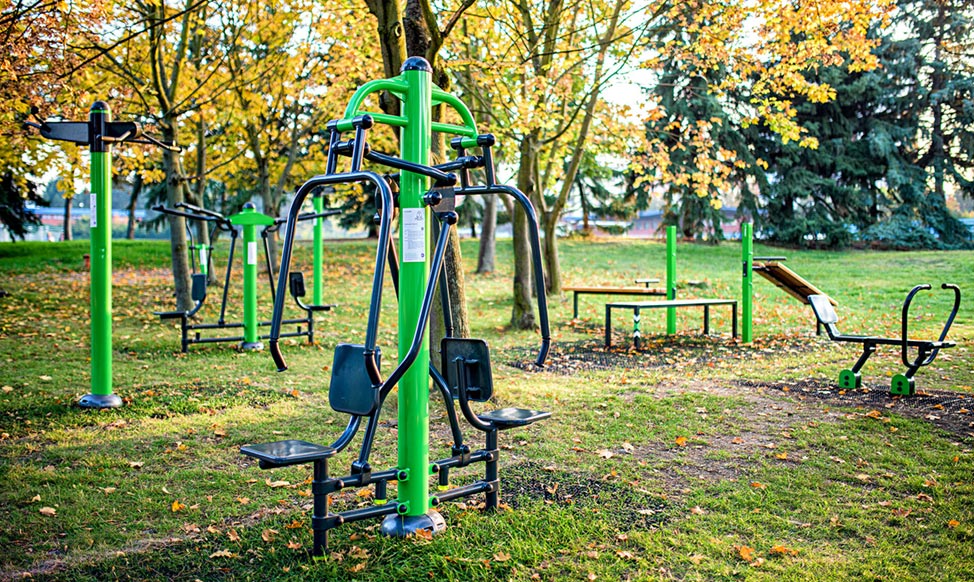
If you have an outdoor gym, you need to take measures to protect it from weather. Check out some of these tips to improve your outdoor gym equipment’s weather protection and extend its lifespan.
Begin With Weatherproof Equipment
Unless you move your gym indoors, you’ll never be able to fully protect indoor gym equipment from the elements. Set yourself up for success by buying weatherproof outdoor gym equipment. Look for the following to identify whether your prospective gym equipment is designed with proper protection:
- High-gauge steel frame: High-gauge steel offers excellent durability and impact resistance. Starting with a steel frame will prevent warping and misshaping from strong winds, heavy snow piles, or extreme heat.
- Weatherproof powder coating: Look for equipment that has at least a 6 mil. layer of powder coating to resist rust, corrosion, and UV damage. Ideally, it should be coated in several layers of different minerals and materials for the best possible outcome.
- No plastic or rubber: Even with the best weatherproofing, plastic and rubber simply don’t offer sufficient durability for use outdoors. Look for equipment made without any plastic or rubber for optimal longevity.
Practice Proper Installation Techniques
Once you’ve selected the best outdoor gym equipment, it’s time to plan your installation. Follow these tips to enhance the weather protection of your outdoor gym:
- Choose a north-facing placement: The southern side of a building gets the most sun exposure, so it’s best to avoid. Choose the north side of a building for the most sun protection.
- Look for natural shade: If you can, install your equipment in a naturally shady spot. Large trees can provide shade for your equipment, but they can also drop leaves and sap that make a mess of your outdoor gym. Be sure to research your trees before installing equipment beneath them.
- Add shade if there isn’t any: If you don’t have a naturally shady spot, install shade sails or an overhang to create one. Not only will doing so extend the longevity of your equipment, but it will give your gym-goers a more comfortable workout.
- Add plenty of drainage: To prevent standing water and ice from forming around outdoor gym fitness equipment bases, make sure you’ve installed proper drainage in your foundation.
- Secure equipment: Never set down a piece of gym equipment and walk away. Each piece of equipment should be anchored to a solid, concrete foundation to prevent tipping incidents.
Perform Ongoing Maintenance
The work isn’t over once your gym is up and running. While outdoor gym equipment requires less maintenance, it’s not totally hands-off. Routine maintenance is the best way to ward off excessive damage from inclement weather. Perform these steps on a regular basis:
- Clean your equipment: Regularly wipe down outdoor gym equipment with a multi-purpose cleaner to get rid of built-up salt, dust, and debris. Then, wipe surfaces again to dry up excess moisture.
- Inspect your equipment: Test all equipment on a routine basis to ensure that all moving parts are functioning correctly. Look for signs of rust or corrosion on the surface and within joints. If found, use a rust remover to clean.
- Repair chipped coatings: If you notice any spots where the powder coating appears to be wearing down, touch it up as soon as possible. Even a small crack can allow moisture to seep in and cause corrosion.
Add External Protection
While it’s smart to select weatherproof outdoor gym equipment that can stand up to constant exposure to the elements, your equipment will last longer if you can limit its exposure. Use these techniques to provide a bit of external protection and help your equipment last longer:
- Use tarps in inclement weather: Simply covering your equipment with a tarp can do wonders in terms of weather protection. Keep an eye on the weather forecast and, when rain or snow are all the horizon, throw a tarp over your equipment. Secure it with bungee cords or rope to prevent it from blowing away.
- Install an overhang: For a more permanent solution, install an overhang over your outdoor gym area. It will provide shade in the summer, protect your equipment from rain in the spring, and keep snow out in the winter.
Make Weather Protection Easy With TriActive USA Weatherproof Outdoor Gym Equipment
Whether you’re upgrading your outdoor gym or building a new outdoor gym, choosing the right equipment can make your life a lot easier. At TriActive USA, we’ve got a wide selection of weatherproof outdoor gym equipment, from exercise bikes and ellipticals to presses, bars, and even accessible gym equipment. Set yourself up for success by exploring our online catalog, or contact us to find the perfect equipment for your outdoor gym.
How to Protect Outdoor Gym Equipment: FAQ
Can gym equipment be left outside?
Not all gym equipment can be left outside. Most commercial gym equipment will quickly deteriorate when exposed to the elements. If you want to build an outdoor gym, it’s important to buy gym equipment designed to live outdoors.
Will gym equipment rust outside?
Without proper protection, metal gym equipment will rust and seize when left outdoors. If you want to leave your gym equipment outside, choose equipment that’s protected with a weatherproof powder coating that resists rusting.
How do you protect outdoor gym equipment from weather?
The first step in protecting outdoor gym equipment from weather is purchasing gym equipment that’s designed to withstand it. Then, take the following steps to ensure its longevity:
- Place it under an overhang or beneath a non-sap-bearing tree.
- Clean it regularly with a damp cloth, then dry completely.
- Cover it with a tarp when rain or snow are in the forecast.
- Promptly address any cracked or peeling paint to prevent moisture damage.
What makes outdoor gym equipment weatherproof?
Outdoor gym equipment that’s weatherproof is specifically designed to resist the elements. It may include features like:
- A high-gauge steel core
- No plastic or rubber parts
- Welded joints and limited bolts
- Limited moving pieces
- Weatherproof powder coating